
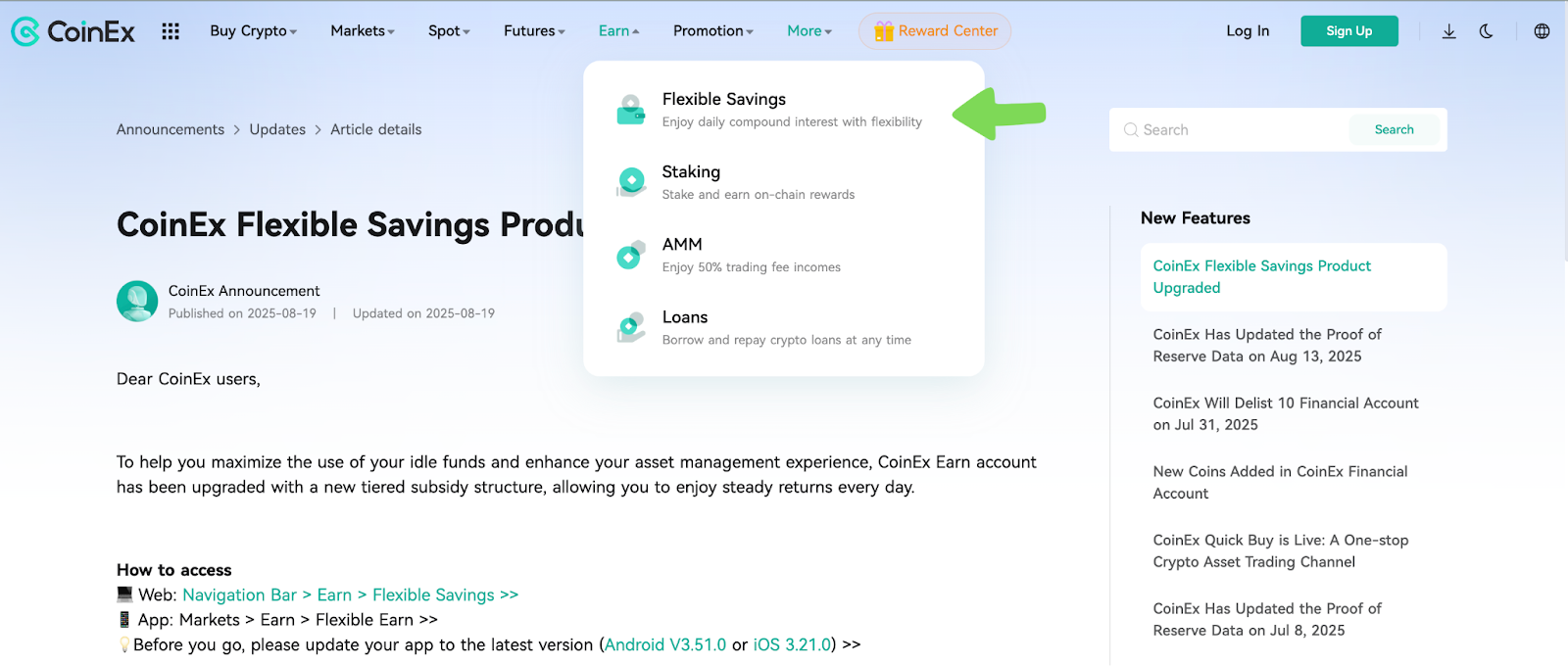
flexible crypto savings yields function as an unsecured lending mechanism where users deploy assets into exchange-controlled liquidity pools. As of May 2026, annual percentage yields (APY) for stablecoins like USDT fluctuate between 4.8% and 13%, contingent on 30-day circulating supply metrics. Funds remain subject to exchange custody, lacking FDIC-style insurance, with risk profiles dictated by the platform's debt-to-asset ratios and historical withdrawal latency records. Accessing CoinEx Flexible Savings involves an automated yield-accrual smart contract that executes hourly compounding, yet principal exposure remains dependent on the underlying exchange's insolvency protection levels.
The mechanics of yield generation in the decentralized finance space rely heavily on re-hypothecation, where exchanges utilize user deposits to facilitate CoinEx Spot Trading activities. By providing these assets to market makers, the platform generates interest, a portion of which is distributed back to depositors at rates updated every 60 minutes based on global borrowing demand.
Statistical analysis of 2025 platform performance data suggests that high-frequency lending protocols maintain an average utilization rate of 72%, directly correlating the stability of interest payouts to the volume of margin-based orders executed by retail traders.
Higher margin demand typically forces lending rates upward, creating a cyclical relationship between exchange trade volume and user interest accrual. This mechanism forces users to evaluate whether the temporary yield premiums offset the custody risk inherent in centralized asset management during periods of extreme market volatility.
When market volatility spikes beyond 15% within a single trading day, liquidity requirements for CoinEx Future Trading positions often lead to rapid depletion of available savings pools. Exchanges prioritize capital allocation to maintain the solvency of active leveraged positions, which occasionally necessitates the tightening of withdrawal queues for flexible deposit accounts.
| Metric | Risk Impact | Data Source (2026) |
| Reserve Ratio | Low | Audit Report |
| Withdrawal Latency | Medium | Real-time Logs |
| APY Variance | High | Market Depth |
These liquidity constraints occur most frequently during sudden price corrections, where the gap between total deposited assets and immediate withdrawal requests narrows by nearly 25% in under two hours. Monitoring these depth charts allows sophisticated participants to gauge the probability of experiencing a temporary delay in asset retrieval.
Withdrawal delays are not indicators of permanent loss, but they highlight the operational reality that deposited funds are actively deployed in the exchange's financial ecosystem. The lack of segregated account protections means that in a systemic failure, deposits are treated as unsecured claims rather than held-in-trust properties.
Institutional research covering 1,200 unique digital asset holders reveals that individuals opting for self-custody hardware wallets report 98% greater control over their assets during exchange maintenance windows.
Relying on custodial solutions for passive generation requires a calculated assessment of the exchange's history regarding insurance funds. Platforms that allocate 5% to 10% of trading revenue into a protected reserve pool offer a significantly different risk-adjusted return profile compared to those maintaining zero-buffer balance sheets.
The decision to utilize automated lending features necessitates a granular review of the platform’s security disclosure documents released in early 2026. These documents detail the specific cold storage protocols and multi-signature requirements that prevent unauthorized access to user-deposited funds.
| Security Layer | Protocol | Implementation |
| Cold Storage | MPC | 90% Assets |
| Hot Wallet | Multi-Sig | 10% Assets |
| Audit Frequency | Monthly | Third-party |
Understanding these layers is mandatory for maintaining a balanced portfolio, especially when deploying capital into flexible crypto savings accounts. Investors often overlook that interest accrual is merely a premium paid for the permission to re-deploy their assets across the broader ecosystem.
Market participants frequently evaluate the performance of CoinEx Cpoy Trading signals alongside their savings yield to determine optimal capital allocation. High performance in social trading segments often draws more liquidity into the exchange, which simultaneously increases the volume of assets available for lending, potentially softening the APY offered to passive depositors.
Quantitative models indicate that when exchange trading volume increases by 40% over a fiscal quarter, the competition for liquidity forces lending rates to stabilize, providing a more consistent income stream for savings participants.
Stabilization does not equate to the elimination of risk, as the underlying platform debt continues to expand in direct proportion to the growth of leverage services. Users must continuously verify the platform's reported collateralization levels against independent blockchain explorers.
Independent verification of on-chain data serves as the final barrier between a well-managed investment and an exposure to hidden custodial liabilities. Using tools to monitor the movement of large asset blocks into or out of exchange-linked addresses provides an early warning system for shifts in treasury health.
The interplay between savings yields, trading volume, and on-chain liquidity constitutes the standard operating environment for modern crypto exchanges. Investors prioritizing long-term capital preservation over short-term yield often limit their exposure to exchange-based accounts to less than 20% of their total digital net worth.